
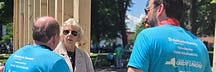
A concept and a plan
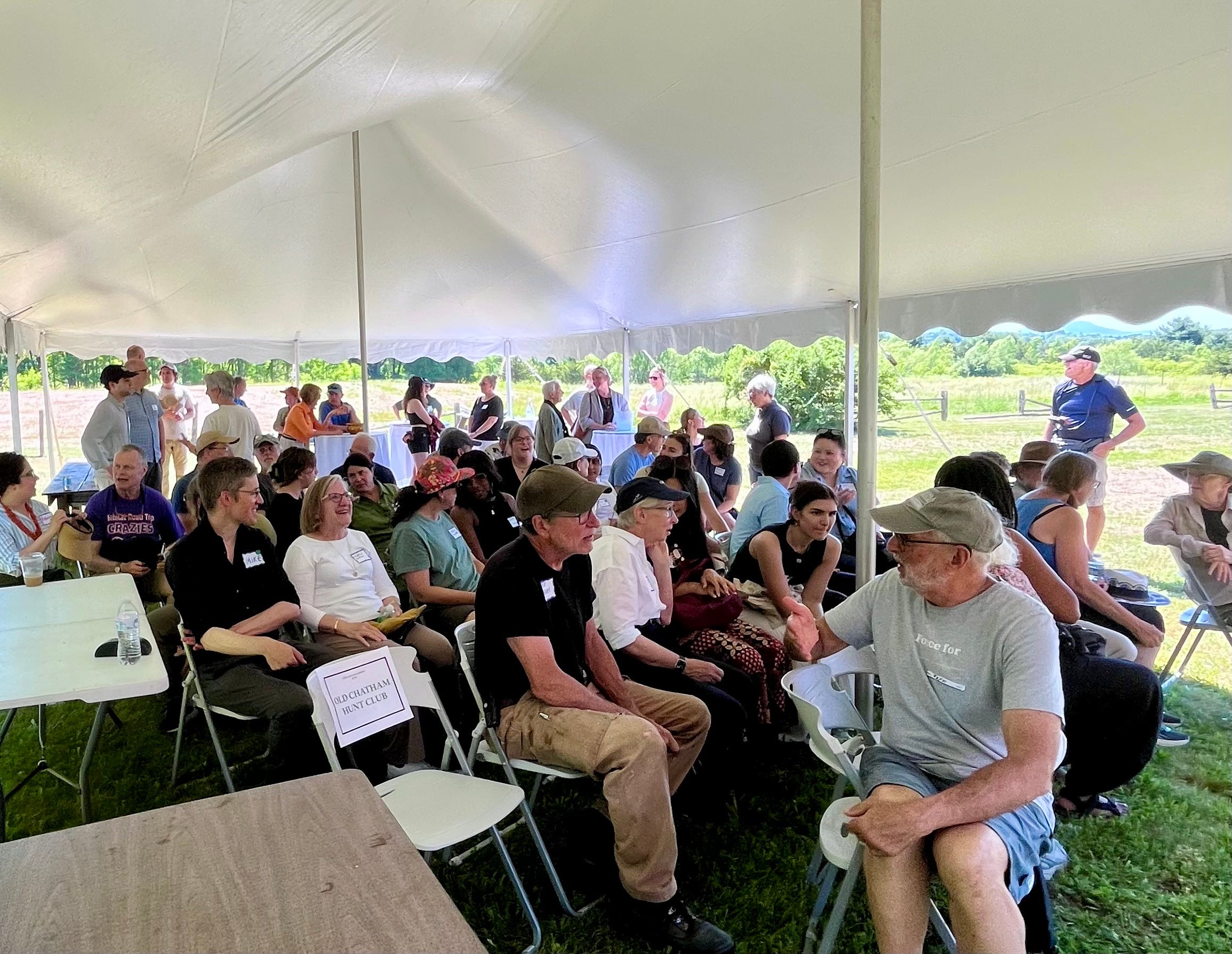
A community comes together

“Those who say it can’t be done are usually interrupted by those doing it.” - James Baldwin
This week, we and our partners formally introduced the “Bell’s Pond Community Space” project to the public.
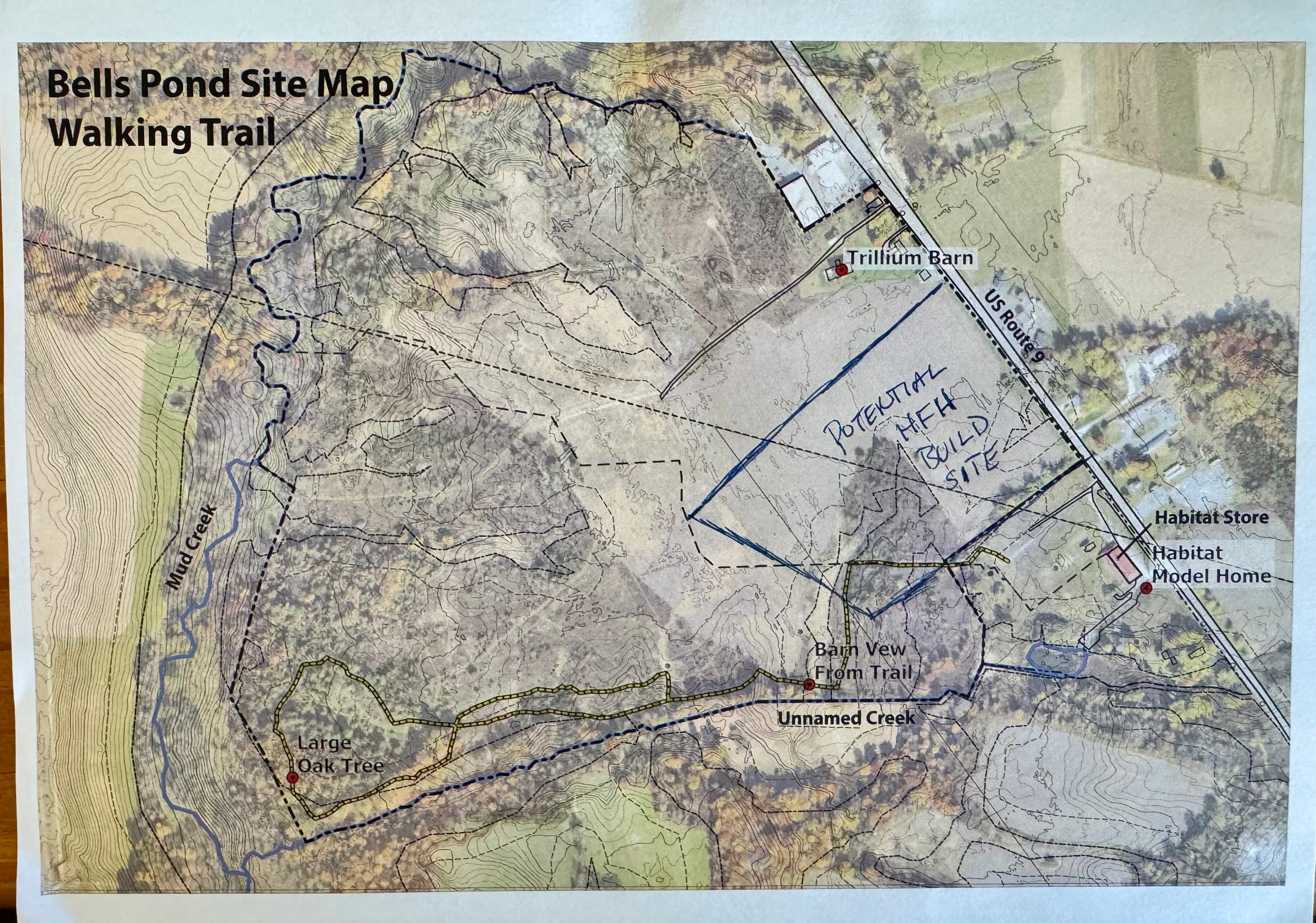
This is a collaboration between conservation groups and affordable housing organizations that will serve many community needs: conserving land and providing community access to trails and nature; reclaiming and restoring natural habitats, and building needed housing for average- wage and lower income individuals and families.
The site (approximately 145 acres) is adjacent to the property we acquired last year for our administrative offices, ReStore retail operation, and this summer, a construction assembly facility.
It was all formerly a dairy farm, and in the early 2000s was pitched as a baseball/softball training facility, with more than a dozen ball fields, dorms and assorted community spaces planned. A community septic system and other infrastructure was installed. That project failed, in part due to the financial crisis, but also for other reasons.
Our now-new HQ site (about 10 acres of the entire parcel) sat mostly vacant for the better part of a decade. The existing main structure was utilized for brief periods, as a market, a school, and as a restaurant. Once upon a time, it was also a drive-in theater, I am told. The purchase was made possible via a grant secured for us by our local state assemblymember.
(We have moved from a former roller skating rink to a former drive in movie theater. I wonder about that and the karmic implications.)
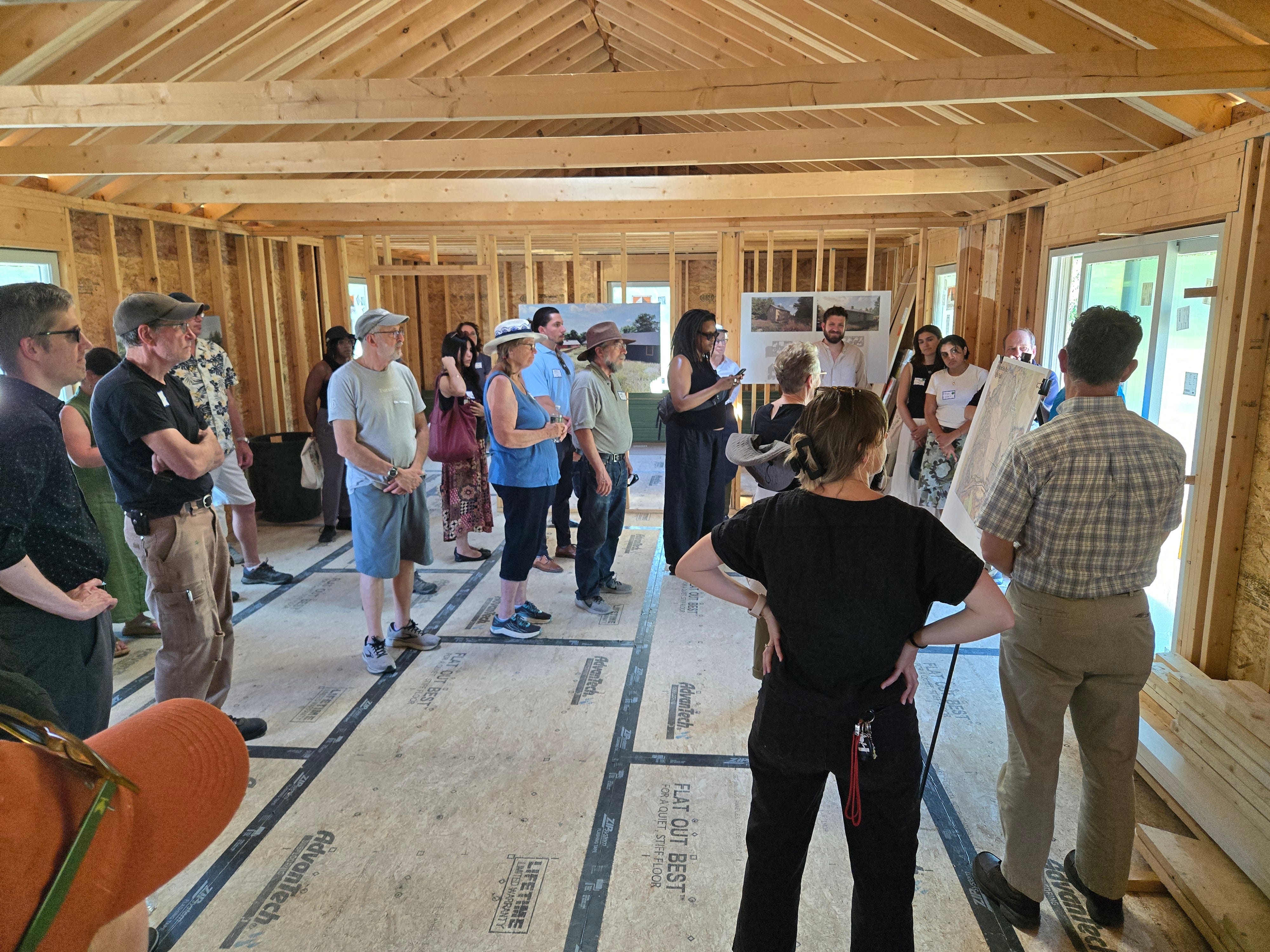
The involvement of the four partners — housing organizations Columbia-Greene Habitat and Trillium Community Land Trust, and conservancy outfits Columbia Land Conservancy and Scenic Hudson — was gestated in a coalition of affordable housing and conservancy groups (16 in all) located in NY’s Hudson Valley. Over the past five years the Hudson Valley Alliance for Housing and Conservation has provided a forum for collaborative development by organizations not naturally allied. The event last week was part of the Alliance’s twice-annual community reception and site visit: a tangible demonstration of how solutions to vexing problems can be achieved.
For us, the Bell’s Pond project will enable us to accelerate our plans to build more, more often, in a fashion that suits the character of the area we serve, by focusing on efficient, low-cost starter homes built in small clusters.
The Times Union of Albany featured our Rural Starter Home program in a story published this week on the completion of the first home.
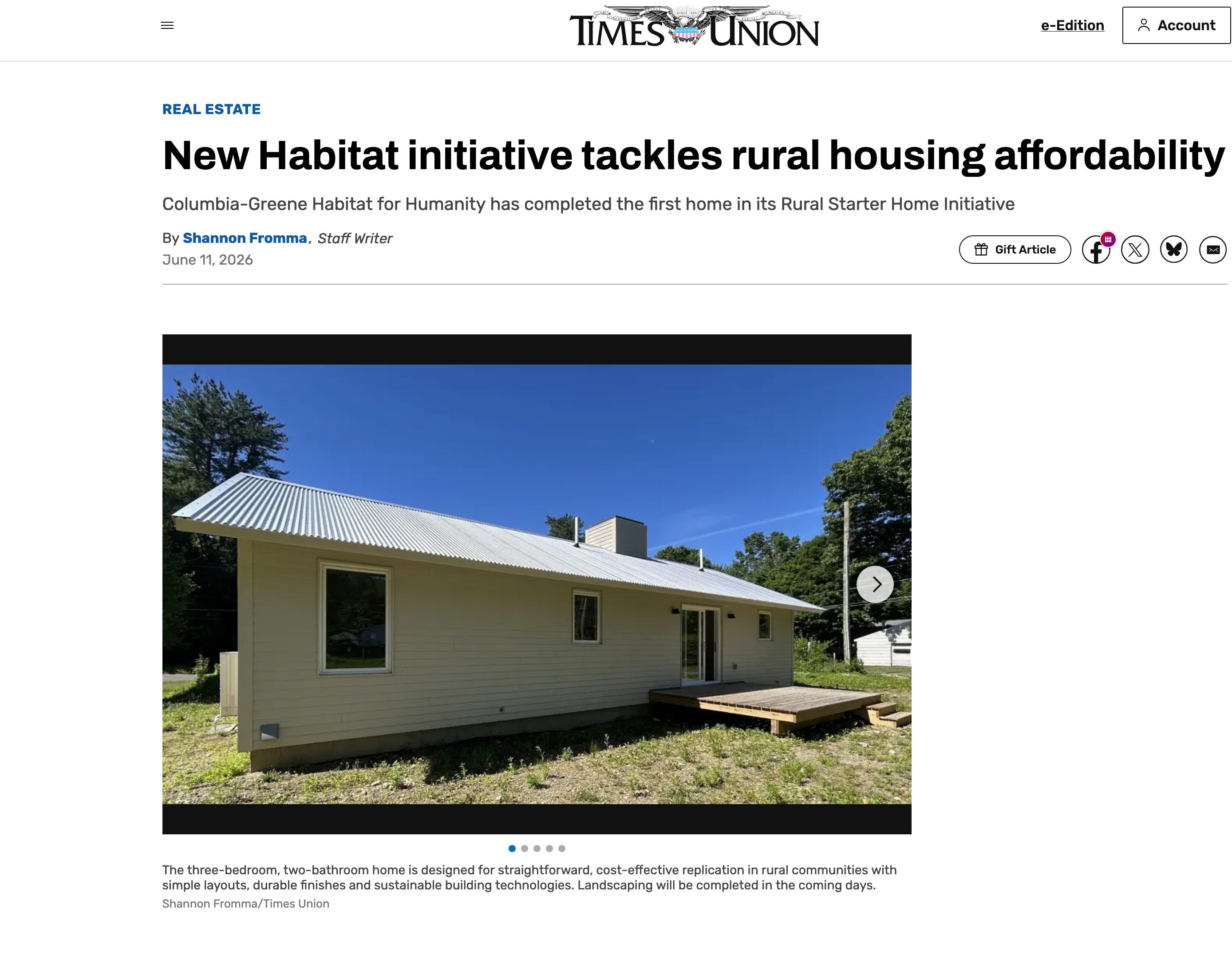
The story reported:
“The three-bedroom, two-bathroom ranch home is one of four starter-home models designed for straightforward, cost-effective replication in rural communities with simple layouts, durable finishes and sustainable building technologies. The compact homes are intended to be affordable, replicable and accessible, helping local residents enter the housing market, build equity and establish long-term stability.
The project is also rooted in a broader goal: to help communities retain essential workers, such as teachers, nurses and other residents who are increasingly being priced out of the places they serve.
The challenge is especially pronounced in Columbia County, where the median home sale price ranges from roughly $414,000 to $485,000, according to the state Department of Taxation and Finance. In May, the average sale price climbed to $1.3 million — up 30% from the same period a year earlier — according to data compiled by William Pitt Sotheby’s International Realty.
To address that gap, Habitat has designed the homes around what local workers can realistically afford. The organization aims to keep construction costs below $250,000 per unit, excluding land acquisition and site-development expenses, which vary by property. The estimate covers the home itself, from foundation to finish.
Unlike some affordable housing programs, buyers will own both the home and the land. Rather than paying market-rate prices, purchasers pay an amount based on their household income and family size, making homeownership attainable for residents who would otherwise be priced out of the traditional housing market.
While the program is geared toward first-time homebuyers, that is not a strict requirement. Applicants generally must earn between 50% and 80% of the Area Median Income in Columbia and Greene counties, or roughly $45,000 to $85,000 annually. The Niverville home has been appraised at $340,000, but will be sold through Habitat’s affordability model, which sets the purchase price so that housing expenses do not exceed roughly 30% of the buyer’s income.”
“You gain strength, courage and confidence by every experience in which you really stop to look fear in the face. You are able to say to yourself, ‘I have lived through this horror. I can take the next thing that comes along.’ You must do the thing you think you cannot do.” - Eleanor Roosevelt
There is still months of pre-development engineering, fundraising, site planning and environmental and municipal reviews before a spade of dirt will be turned.
As that unfolds, a community will watch itself grow.
Congratulations to the community and good luck going forward.
Watching a community grow is a beautiful thing. Like being loving parents who want their children to do more than just survive. Habitat is the midwife we need for our nation to thrive.