
May Days
Protect the small places


According to Wikipedia:
“May Day is a European festival of ancient origins marking the beginning of summer, usually celebrated on May 1, around halfway between the Northern Hemisphere's spring equinox and midsummer solstice.”
It is also known globally, as a distress call. Wikipedia, again:
The "mayday" procedure word was conceived as a distress call in the early 1920s by Frederick Stanley Mockford, officer-in-charge of radio at Croydon Airport, England. He had been asked to think of a word that would indicate distress and would easily be understood by all pilots and ground staff in an emergency. Since much of the air traffic at the time was between Croydon and Le Bourget Airport in Paris, he proposed the term "mayday", the phonetic equivalent of the French m'aider.”
Apropos of this contrast, it does seem that we we are existing in a dual reality, alternating between faerie festivity and alarming calamity.
On May 1, there was supposed to be a general strike, a shutting down of economic activity in protest of the creepy creeping authoritarianism occurring in this country. Most folks seemed to have boycotted that strike instead. Without a safety net, it’s dangerous to go out on that wire.
The economy, some reports tell us, is chugging along. Maybe so, to statisticians and economists, but it doesn’t feel that way to most of what used to be called the middle class.
Average wage workers in the US (the current median wage for full-time workers is approximately $64,000; it varies state-to-state and by region, as per the report below,) are finding it difficult to survive, much less get ahead.

A 2025 report by the Ludwig Institute showed that: “For the bottom 60% of U.S. households, a "minimal quality of life is out of reach.” Yes, read that again. Out. Of. Reach.
The Institute’s Minimal Quality of Life Index “…offers a more comprehensive measure of the cost of living than traditional metrics, revealing the resources needed to secure a foothold on the bottom rung of the American dream and climb it over time.”
Their work shows the data behind what so many of us have been experiencing over the past couple of decades: that the cost of a basic level of economic security has doubled — increasing close to 125% from the turn of the century through 2024 —while, on an adjusted basis, the median income for the bottom 60% of US household declined by four percent.
This math doesn’t add up to well-being. It spells economic disaster for tens of millions of households, all across our country. There’s no cake left to eat.
“Experience declares that man is the only animal which devours his own kind; for I can apply no milder term to the governments of Europe, and to the general prey of the rich on the poor.” - Thomas Jefferson
In the Hudson Valley of New York, where I live and work, the economic duality is stark and widening. In its latest housing report, Hudson Valley Pattern for Progress noted:
“Our research continues to illustrate that homeownership is increasingly out of reach for first-time buyers. This reality reflects nationwide trends: according to the 2025 Profile of Buyers and Sellers published by the National Association of Realtors, 79% of buyers last year were repeat buyers with a median down payment of 23%.
What’s more, the median age of first-time homebuyers hit a record high of 40 in 2025. Communities in the Hudson Valley must continue to take intentional steps to expand the range of homeownership opportunities so that households across the income spectrum have a realistic chance to own homes in the communities where they live and work.”
Again that phrase…out of reach.
Housing is just one of the necessities of life that are increasingly unattainable for most middle-income workers, but it is at the core of the cost escalation death grip that has caught so many.
You can’t sustain a community if there is no housing for your workers, or if the housing inventory is skewed towards the high-earners or second home owners. Our children can’t stay where they were raised (if they choose to) and folks can’t start out or move up. There isn’t housing for the workers who serve your meals, build and repair your homes; draw your blood. It’s a supply problem and it is a recipe for a whole lot of not good.
For decades we have been fed a line of thinking that government is the problem, and that market-based approaches are the solution.
The solution is not spending more money; the federal government spends upwards of $70 billion annually on housing programs. NY State is in the midst of a five-year, $25 billion plan. And it is certainly not simply taking an axe to existing programs. The money being spent has impact, but it is not getting where it is needed most.
Neither the axe nor spend approach has worked: the symptoms and status quo persist.
Given the economic figures cited at the top of this article — and that is only one of many damning set of statistics — a new approach and line of reasoning needs to emerge.
Rugged individualism may work for some, but it does not solve big, systemic problems. Government works best when it brings focus and incentives to solve intractable issues and unlocks local initiatives and entrepreneurial energy. But there is a disconnect between capital and the small innovators that can innovate most effectively.
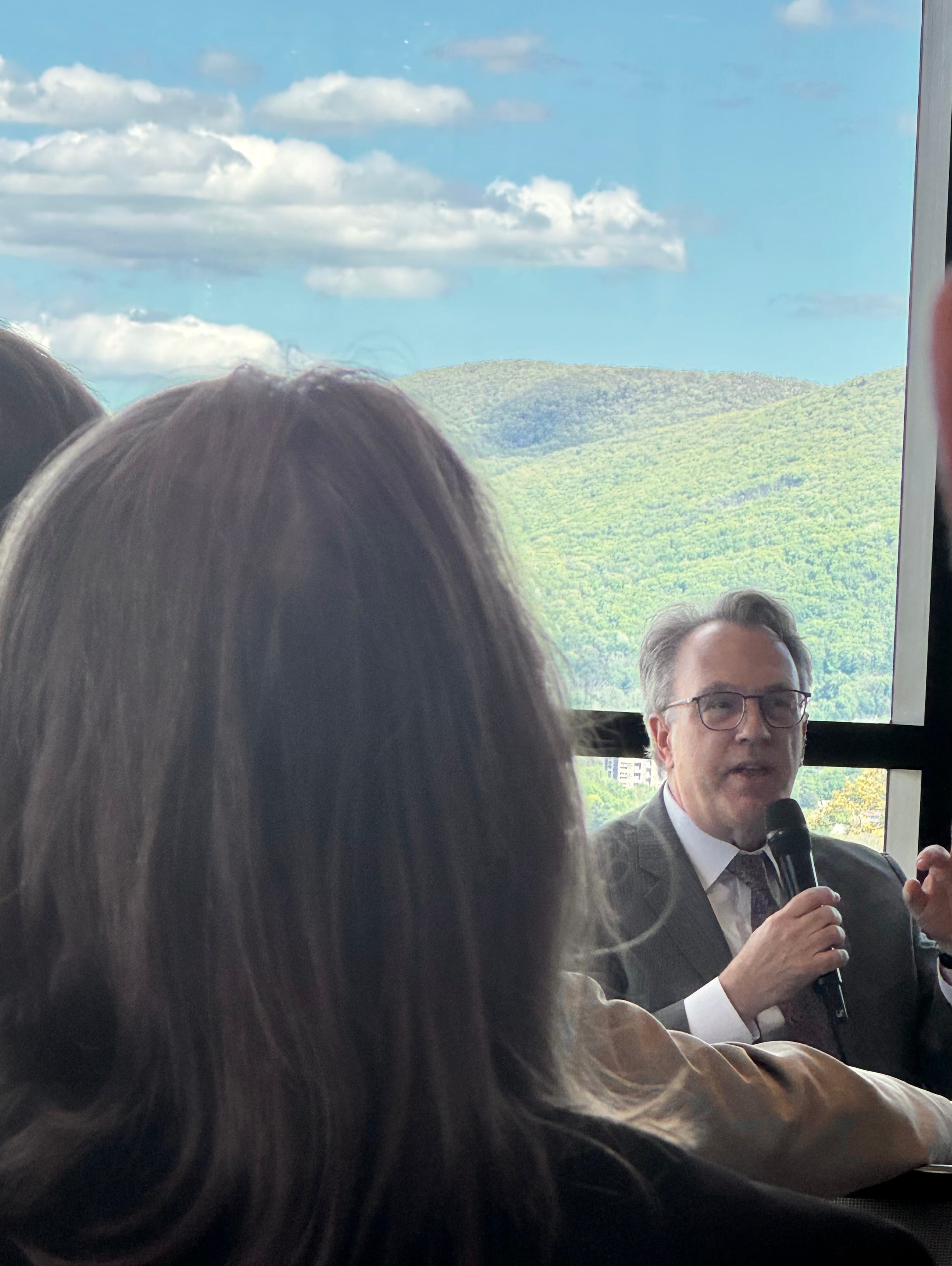
This reality was tacitly acknowledged by John C. Williams, the President of the NY Federal Reserve Bank at a meeting I recently attended. He agreed that we need to unleash creativity, that there is a “K-shaped” economy where the leg of the “K” is lagging, and that there is a “mismatch” between the abundant public and private funds and getting them to those who can put it to use at local scale. In response to a question I posed, he offered no real insight on how to bring these into alignment, which was not unexpected.
Scaling down is an absolutely imperative to bending the economy to better serve the majority of people. We must demand this. We are a nation of communities, of neighborhoods, of small places, not just urban and corporate megalopoli. We have the ability to think smaller, and to channel funding to smaller-scale solutions that work on the ground in communities of need. We simply are not using that ability to create change at scale and focus it where it is needed most.
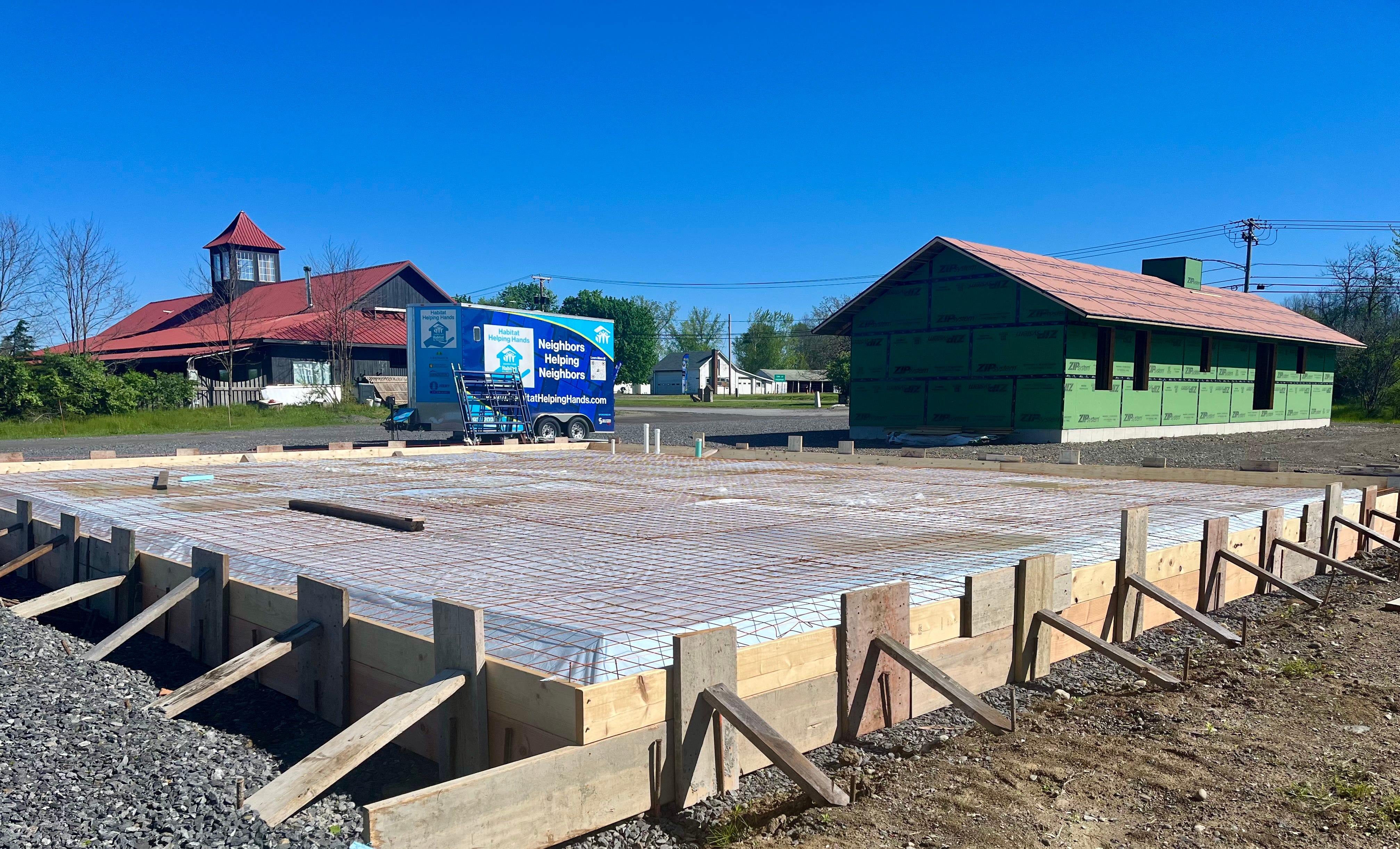
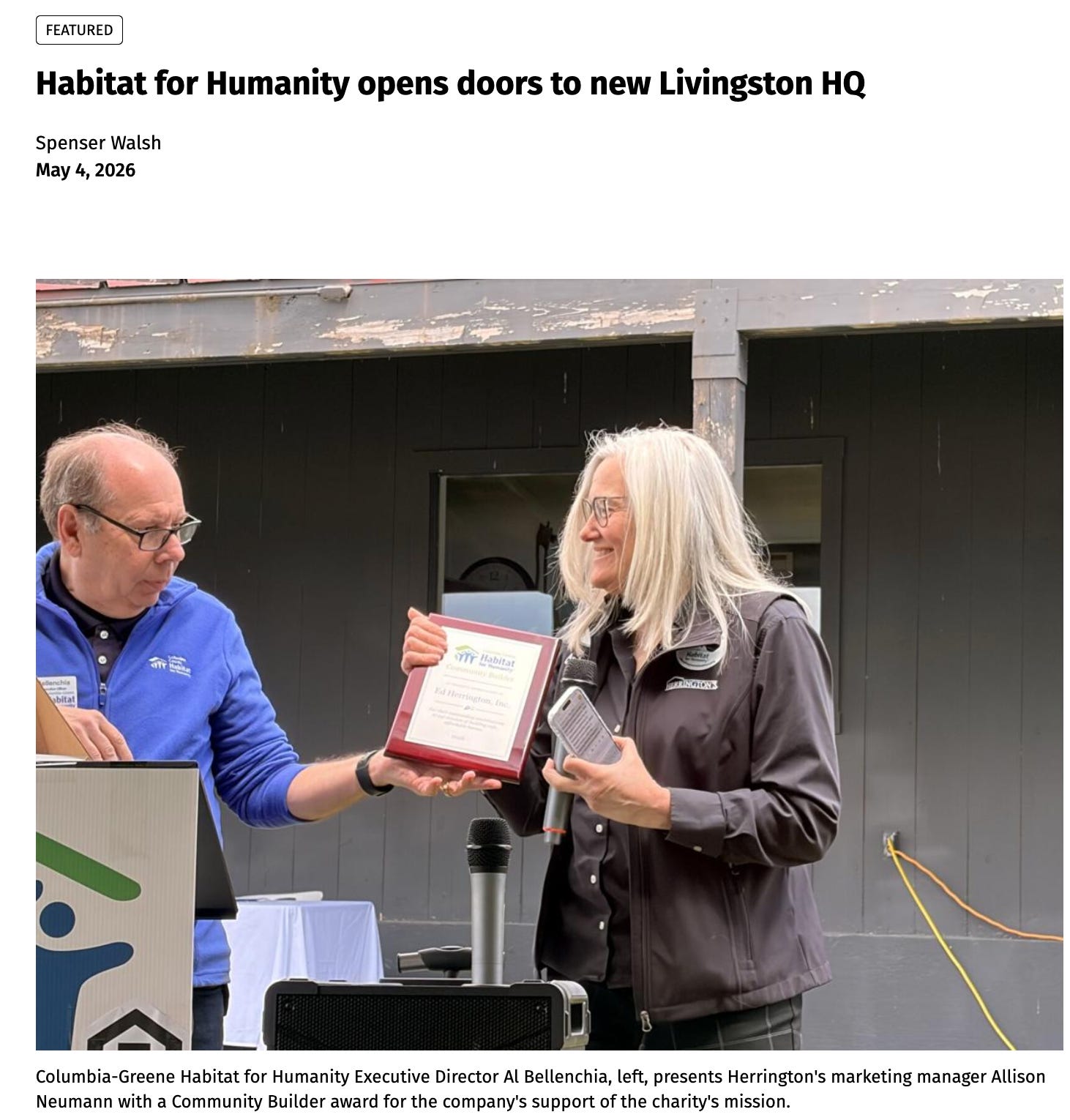
At our recent community celebration, we thanked local citizens who have dedicated themselves to changing our thinking and building a better community. There are many who are leading the way with their deeds, not just words.
We can create and grow solutions to the issues we face. It must start at home, and be supported from the bottom and the top of our governmental structures.
Find those who are showing the way and lend a hand, your heart and your voice.
We have that power. Time to use it.
I don't know if I told you that my husband tried to come up with affordable housing solutions as part of his public work. Every time, the programs were corrupted by developers who demanded loopholes, made payments to avoid affordable unit requirements, or owners who didn't want their property values suppressed. It was maddening, because he could see all kinds of ways to make affordable housing. But capitalism always found a way to ruin it.
Ouch. That hurts. We can and must push through the selfish greed that we have tolerated and even applauded for way too long. We can and must do better.